01
Design review and coordination
Review mechanical and electrical design with installation in mind through RIBA Stages 2–4. Check interfaces, access, maintainability and the information needed for a buildable package.

M&E installations
A delivery capability that keeps M&E design, procurement, installation and commissioning connected through the work.
Talk through M&E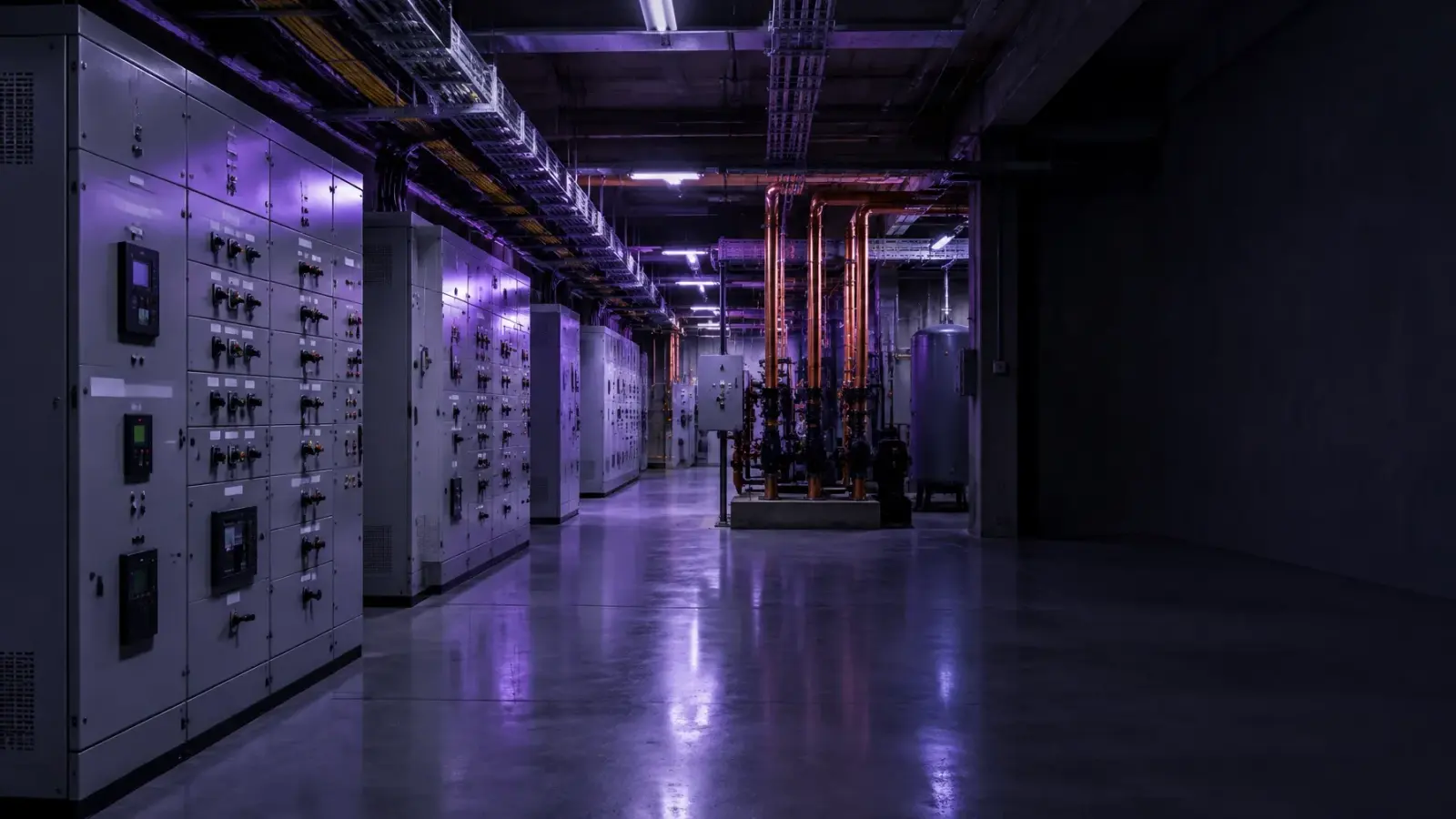
Why it matters
M&E packages sit at the meeting point of design, procurement, access, installation and operation. A late decision in one place can stop progress somewhere else.
Integrate keeps those interfaces visible in delivery, connecting package coordination to the wider construction sequence and the route to testing, commissioning and handover.
What we do
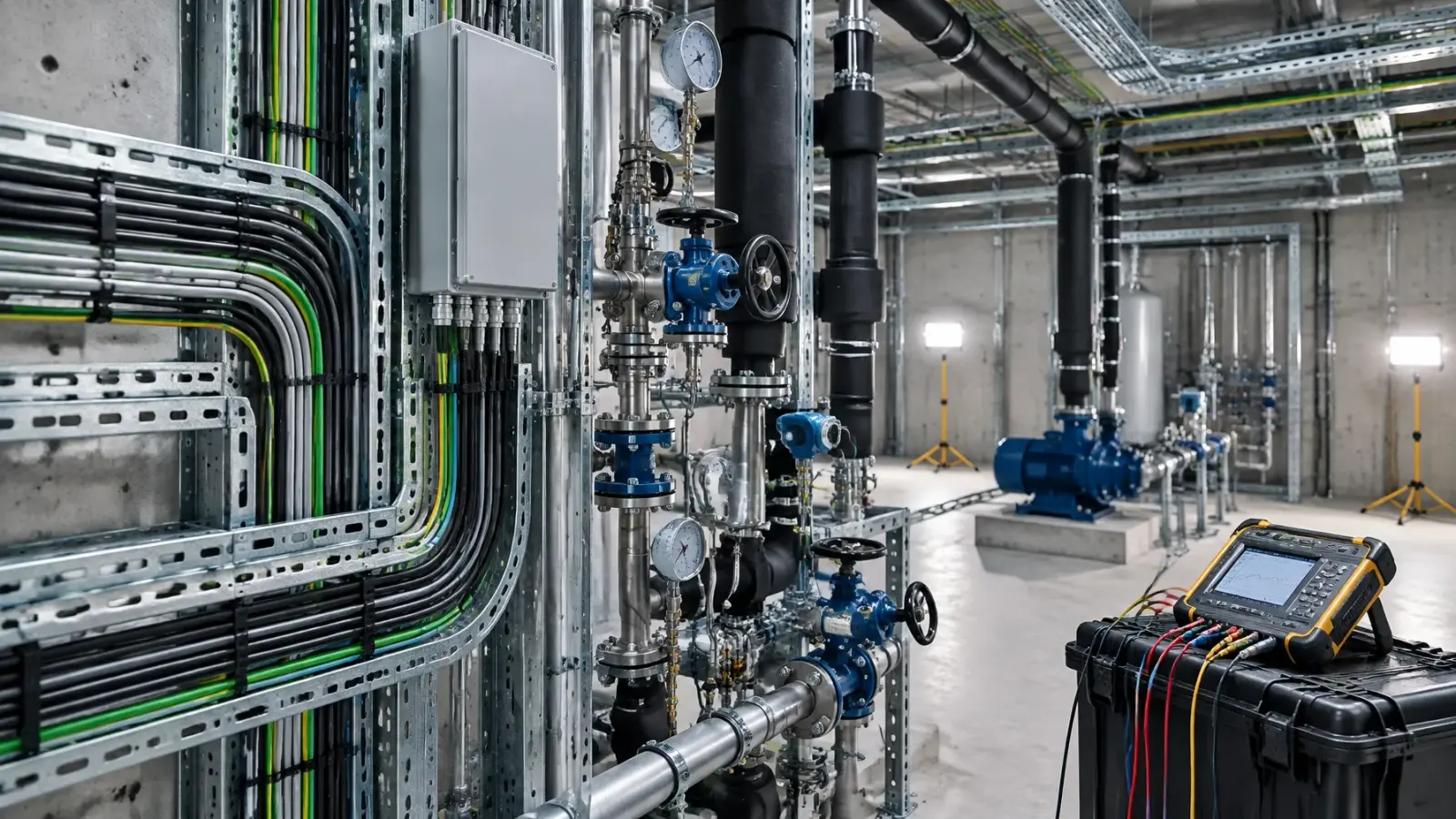
M&E package coordination that stays connected to the construction sequence and the wider handover.
01
Review mechanical and electrical design with installation in mind through RIBA Stages 2–4. Check interfaces, access, maintainability and the information needed for a buildable package.
02
Shape the M&E package, market approach and tender information around the brief and programme. The client gets a coordinated package that can be tested before it reaches site.
03
Bring services coordination into the wider construction sequence during Stages 4–5. Identify long-lead items, access constraints and points that need a decision before installation is affected.
04
Coordinate the M&E package through live works, keeping design queries, containment, cabling, interfaces, progress and decisions visible as installation moves.
05
Plan the route from installation to testing and commissioning. Keep evidence, dependencies and readiness for handover in view, with technical information connected to the wider programme.
06
Bring records, outstanding actions and operational information into a controlled close. The completed M&E package is connected to the wider project handover rather than left as a separate workstream.
How it works
The Integrate Commercial Framework applies four commercial controls across a five-stage procurement spine aligned to the RIBA Plan of Work 2020. In delivery, the team uses the controls as a working rhythm: checking the right information at each gate, recording the decision and keeping the next stage ready for the client, designers and delivery partners.
01
RIBA Stages 0–1
Set performance needs, interfaces and the information needed to test feasibility.
02
RIBA Stages 2–3
Coordinate systems, access, maintainability and the developing construction sequence.
03
RIBA Stage 4
Coordinate M&E package information, market approach and tender readiness.
04
RIBA Stage 5
Use live reporting and controls to keep installation decisions connected to site.
05
RIBA Stages 6–7
Carry test evidence, records, actions and operational information through completion.
Gate A
Set the working cost baseline from the brief, design maturity and M&E interfaces before market engagement, exposing gaps early.
Gate B
Translate the coordinated M&E scope into a clear tender ceiling and challenge departures before a package moves forward.
Gate C
Keep a defined pause point in live installation when safety-critical information, sequencing or controls need review before work proceeds.
Gate D
Carry decisions, records, interfaces and test requirements from tender into installation, commissioning and handover.
Benefits
What we install
These are the kinds of packages, planned maintenance programmes and works the team delivers across building services and installation.
Practice track record / 01
The practice's M&E package leadership on the Olympic Stadium work connected technical interfaces to procurement and delivery.
Practice track record / 02
The practice's experience with the CompeteFor tender system brought a clear route for specialist opportunities and package procurement.
FAQ
There are two engagement models: Integrate can act as Client Representative, or delivery can be provided through selected delivery partners under exclusive agreements. The applicable role, scope and interfaces are made clear at the outset.
A Principal Delivery Partner is an accountable delivery-side role that joins up the route from appointment to handover. It gives the client a clear point for coordination, with the delivery responsibilities set out for the particular appointment.
A Client Representative acts for the client, giving independent advice, challenge and oversight. A Principal Delivery Partner is appointed to lead and coordinate delivery through the agreed delivery model. The role that applies is made clear at the outset.
Integrate works across Defence, Infrastructure and Commercial settings where the work is complex, the interfaces matter and commercial control needs to stay close to delivery.
Yes. M&E installations can be appointed as a standalone service where that is the right fit, or as part of a wider delivery role. The scope and interfaces are agreed at the outset.
Start with the brief
Explore construction delivery, or return to the full services picture.